South Florida Business Journal Featured Story: https://www.bizjournals.com/southflorida/news/2026/04/14/gbi-biomanufacturing-expands-stem-cell-production.html
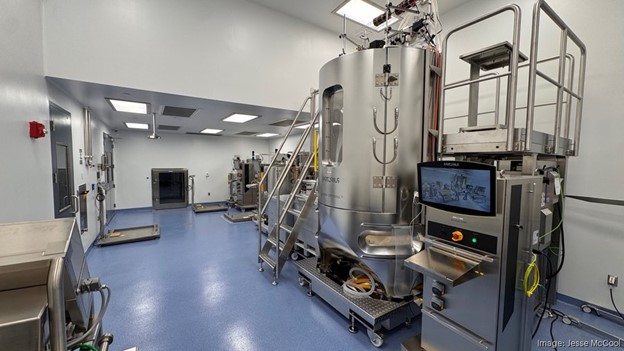
GBI’s expanded facility includes new bioreactors for stem cell production. Photo: Dr. Jesse McCool
By Ashley Portero – Senior Reporter, South Florida Business Journal
Apr 14, 2026
Story Highlights
- GBI Biomanufacturing leased a 40,000-square-foot facility to double stem cell production capacity.
- Florida’s new stem cell law creates a structured pathway for physicians to offer treatments.
- Unclear state enforcement mechanisms risk allowing noncompliant manufacturers to operate unsafely.
GBI Biomanufacturing sees opportunities in stem cells – and it’s already expanding to meet future demand for those biological materials. The Plantation-based company recently signed a lease for a new 40,000-square-foot facility to double its capacity to make stem cells, which can be used to regenerate and replace damaged or diseased tissues and organs.
It comes on the heels of a new Florida law that enables physicians to offer stem cell treatments for certain conditions that are not approved by the U.S. Food and Drug Administration.
The law stands out because it creates a structured pathway for physicians to provide stem cell treatments for orthopedic injuries, pain management and wound care. Advocates say it gives patients access to novel experimental therapies and could turn the Sunshine State into a national hub for medical tourism.
“The state is on the cutting edge of something really significant, we just have to make sure we have the infrastructure on hand to produce stem cells in a safe way,” said GBI President Jesse McCool.
Making stem cells more accessible
GBI produces made-to-order biologics for its clients, such as biotech and pharmaceutical ventures. It specializes in making antibodies often used in clinical trials, but now the firm aims to ramp up its stem cell production, as well.
The company says it has the ability to safely scale production in a way that McCool hopes can eventually drive down the price of stem cell therapy, which is not covered by health insurance. GBI, he said, will also help the state become a safer alternative for patients who typically travel outside of the country to access stem cell therapy.
The Florida law says stem cells must be retrieved, manufactured, and stored in a facility registered and regulated by the FDA. The cells must be processed in compliance with the agency’s good manufacturing practices and the treating physician must receive a post-thaw viability report confirming the product contains live cells.
While advocates like McCool say the law is written in a detailed way to promote safety, he said the real issue is ensuring that state agencies will make businesses and providers comply with the legislation.
“The requirements are clear, but without federal oversight there’s always room for bad actors to do it wrong because they want to keep prices down,” he said.
Oversight gaps raise concerns
Right now, it’s unclear what state agency will enforce and oversee stem cell production in Florida.
That is a concern for Priya Chordia, CEO of Texas-based Tavra Biosciences, a supplier of bone marrow-derived stem cells to physicians. The company partners with GBI to manufacture its stem cells.
Chordia is optimistic about the opportunities in Florida, with plans to move Tavra to the state. But she’s hoping lawmakers will clear up how they plan to enforce the state’s stem cell law so businesses comply with manufacturing and sourcing requirements. That’s essential to guarantee patients are receiving safe and effective treatments.
“We’re talking to legislators to get that clarification,” she said. “They put the law in place, but now we need to make sure it’s enforced.”
The biggest risk is contamination, which is a concern because the therapies involve living cells. If something unwanted gets into the supply, it could multiply or cause infections or other harm when administered to patients. Another risk is that patients could receive a product that does not have viable cells at the time of use.
While Florida is already home to a robust marketplace for stem cell therapies, Chordia said many are noncompliant providers that could be providing unsafe or ineffective products to patients.
“Will they cease their noncompliant activities? If there’s no enforcement of the law, those companies have zero incentive to work with compliant stem cell providers,” she said.
GBI’s expansion will enable the company to manufacture up to one million doses of stem cells per year. McCool said it’s an exciting prospect, with the potential to change the lives of patients suffering from conditions such as chronic pain, arthritis and ligament or tendon injuries.
But it’s up to lawmakers to ensure the industry will not be corrupted by noncompliant manufacturers and providers.
“If you’re going to pursue the Florida market to bring access to patients and help their daily lives, let’s make sure we are manufacturing products in safest possible way,” McCool said.
South Florida Business Journal
Related Articles
- Stem cell law positions Florida as regenerative medicine hot spot
- Longtime biotech company GBI expands Broward County facility